





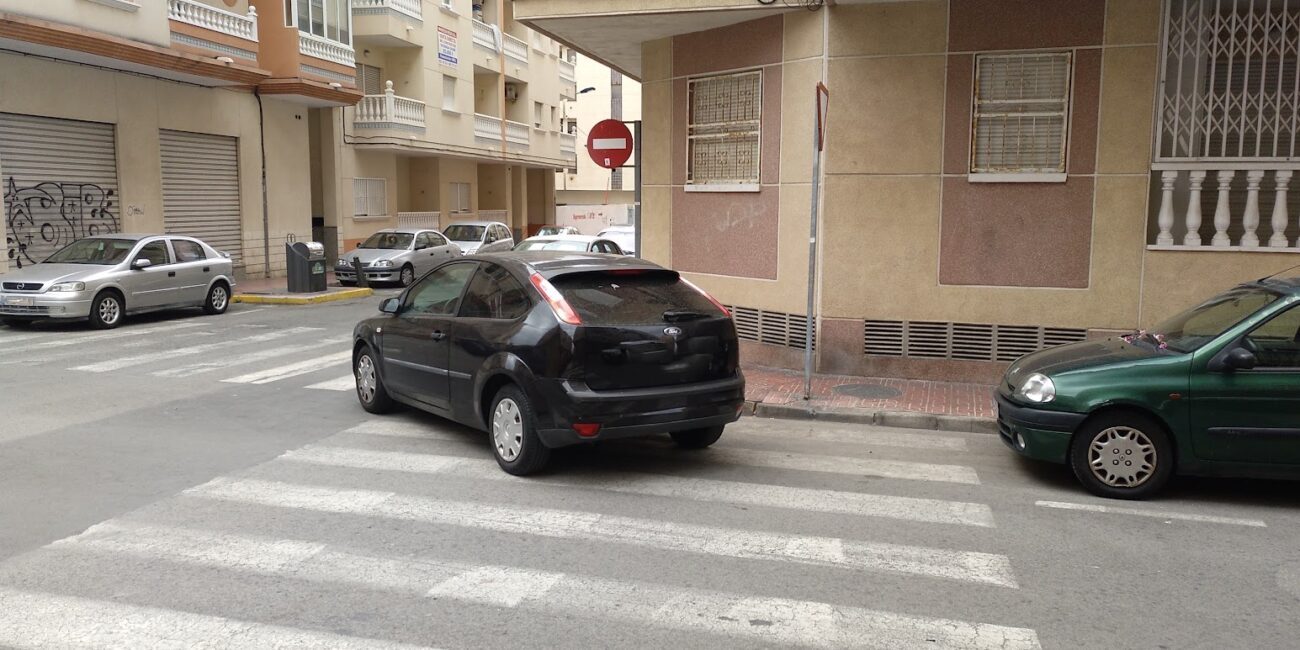
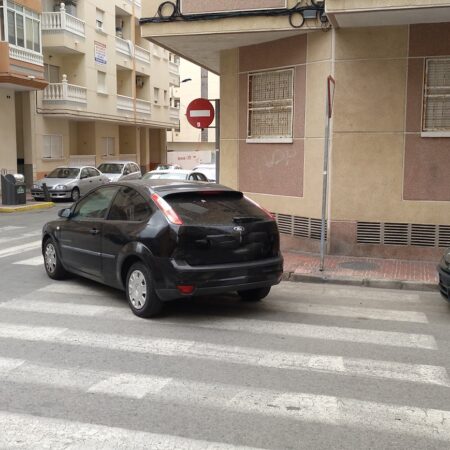
Have you ever pulled into a space near a junction or right beside a pedestrian crossing and thought it was fine because there were no painted lines or prohibition signs? It is an easy assumption to make, but under Spanish traffic regulations, that assumption can prove both dangerous and illegal.
In Spain, parking legislation features an all-encompassing rule where visibility is key. Leaving a vehicle in a position that obstructs the sightlines of other motorists is strictly prohibited, regardless of whether there are painted road markings present. Parking right up against a pedestrian crossing, for example, blocks the view of approaching traffic, preventing drivers from seeing pedestrians who are stepping out to cross the carriageway. The outcome of such an obstruction can easily be fatal, meaning the act is far from harmless and entirely against the law.
Motorists occasionally criticise the system, wondering why Spain does not explicitly ban parking near pedestrian crossings. The reality is that the law already does, but its scope is intentionally wider than simple kerbside paint. Unlike other countries that rely exclusively on specific painted markings or separate individual rules, Spanish regulations are designed to encompass almost any scenario where visibility and road safety are undermined.
This overarching visibility rule applies to a wide variety of locations across the road network. Parking is not permitted where it blocks essential views at junctions, around bends, or near the brow of a hill, where sightlines are inherently restricted. While there are certainly plenty of areas that feature clear painted markings to show where parking is forbidden, the absence of paint is never an open invitation. Always consider whether your parked vehicle compromises visibility for others before switching off the engine.
Other Articles

A Cocktail for Disaster: Why Party Season Calls for Zero
October Tyre Safety: Why a Seasonal Check Is Vital

No Comment! Be the first one.