




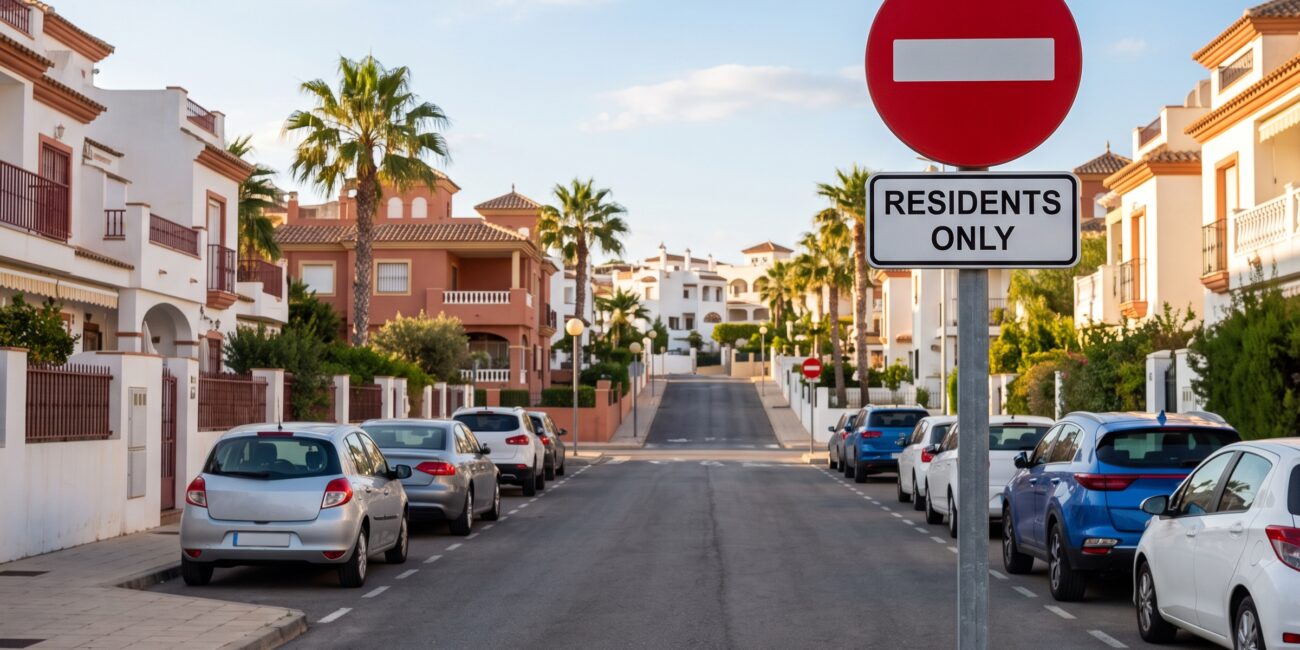
A common belief within Spanish urbanisations and residential communities suggests that living on a “private road” allows residents to set their own motoring rules or ignore national traffic regulations altogether. In reality, private land ownership does not place you outside the law.
As detailed in the legal translations provided on spanishtrafficlaw.es, Spanish traffic regulations govern the entire national territory. The law applies not only to public urban and interurban highways, but also to private roads and land utilized by an “indeterminate community of users”.
What does this mean in practice? When access to private land is opened beyond the solitary property owner to other drivers, road safety regulations apply in full. A typical example is a supermarket car park, such as Carrefour. While the commercial entity owns the ground, opening the facility to visiting shoppers makes it private land utilised by an indeterminate community, meaning statutory traffic laws govern the circulation of vehicles within it. In contrast, common use applies to areas strictly reserved for verified owners, such as a secure private parking facility for a community of neighbours.
Furthermore, motorists frequently misjudge the status of commonly used tracks, including unpaved rural routes without asphalt or road signs. The Road Safety Law governs all land open to the movement of vehicles. Drivers must hold an appropriate driving licence, maintain current insurance cover, and ensure the vehicle has passed the ITV technical inspection. Basic safety rules remain fully enforceable: using a mobile phone or failing to buckle a seatbelt on these routes remains entirely illegal.
Owning the road does not grant permission to invent private motoring rules. If a route or car park is accessible to a wider community of road users, statutory traffic safety laws remain firmly in charge.
Other Articles
A Cocktail for Disaster: Why Party Season Calls for Zero



No Comment! Be the first one.