





Ever wonder why high-visibility clothing seems to glow even on the dullest overcast afternoon? The answer lies in an extraordinary accident from the 1930s.
Recovering from a severe head injury in a pitch-black bedroom, Bob Switzer and his chemist brother Joe began shining ultraviolet lamps on chemical minerals. Mixing luminous compounds with bathtub shellac, they tested their new brew on a real wedding dress to create a “floating glowing bride” for stage magic.
That discovery became Day-Glo. Allied troops used it in the Second World War to mark vehicles for aircraft, and by the 1960s, railway crews proved it dramatically cut trackside fatalities.
The science is clever. Standard dyes only reflect visible light, fading rapidly at dusk. Fluorescent pigments do something different: they absorb invisible ultraviolet (UV) daylight and convert it into visible light, making the material appear unnaturally bright.
However, once night falls and solar UV vanishes, fluorescence stops working. That is where retroreflective glass-bead tape takes over, bouncing headlight beams straight back to a driver’s eyes.
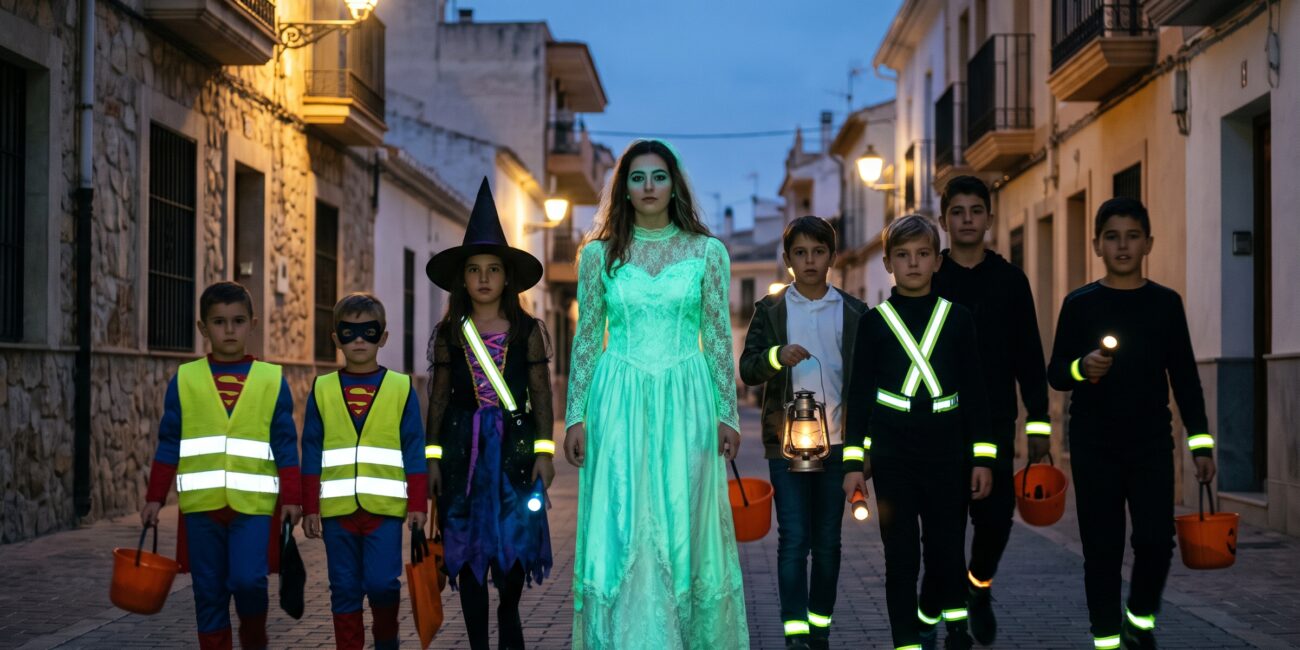
As Halloween approaches, dark costumes present a major danger on our streets. To keep trick-or-treaters safe, use the science of biomotion:
- A reflective patch on a child’s chest looks like a static road reflector.
- Placing reflective bands around ankles and wrists makes all the difference. As children move, their pedalling or walking legs create a distinctive biological motion that a driver’s brain identifies in milliseconds.
Those moving bands buy drivers three precious seconds of braking distance. Enjoy the spooky costumes, but remember: look after yourself, look after each other, and make sure drivers can see you on the road.
Other Articles
The Private Road Myth: Why Spanish Traffic Law Still Applies




No Comment! Be the first one.